Learning another language is about more than just memorizing verb tenses and vocabulary; it’s about empathy, cultural curiosity, and expanding our world views.
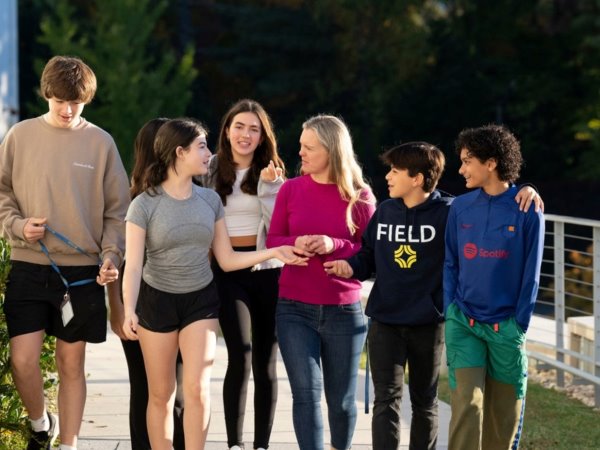
Upper School students in Filomena Lococo’s French IV classes explored these concepts through an immersive monthlong unit focused on health and wellbeing, designed to challenge them to think about how other cultures around the world care for their bodies, their minds, and each other.
“Opening up our world vision outside what we know can provide us not only with additional resources for ourselves but also understanding and appreciation of how others might approach similar situations,” Filomena noted.
So how do you explore these cultural nuances in a classroom setting? Through three distinct lenses: individual care, global medicine, and communal wellness. Students began by exploring French vocabulary related to health, the imperative tense, and reflexive verbs and then applied those skills to practical scenarios, such as writing first-aid guides, roleplaying pharmacists at a French pharmacy, and discussing their personal health habits with their classmates, en Français, bien sur!
From there, they expanded their learning to global health systems, researching international relief organizations such as Médecins sans Frontières (Doctors Without Borders) and the Red Cross, and how these humanitarian groups respond during a global health crisis.

However, one of the most pivotal moments in the unit is when students recreated a quintessential hammam in their classroom because it challenged them to think about how this ritual can be a form of self-care. A traditional hammam, which is far from the modern commercialized spa experience that we know in the United States, historically served as an important civic and cultural center in the Middle East and North Africa.
Beyond the Spa Experience
In North Africa and the Middle East, the hammam is much more than a spa; it is a central tenet of civic life and public health. Historically, these bathhouses were a place for physical hygiene, communal gathering, and spiritual purification that was part of everyday life, rather than a luxury experience. Today, many hammams are no longer a place for personal hygiene due to advancements in plumbing, however some still maintain their ceremonial significance (Williams 2012).

To truly understand the cultural significance of this ritual, students took on roles as employees of the spa and spa guests. At the entrance, guests received handcloths as they stepped into the calming and serene space, filled with various aromas and calming music. They transitioned to the “steam room” to practice mindful breathing. Next, they moved to the “gommage” where they exfoliated their skin and applied lotion to their hands. The hammam experience concluded in the relaxation room where students shared North African desserts and discussed how public, communal traditions like a hammam are different from Western self-care.
"One big takeaway from the hammam for me was learning about the different cultures that have overlapping practices in terms of self-care and being able to learn about the importance of the hammam through simulating it in French class," Julie '29 shared.
Citations:
Williams, E. (2012, October 1). Baths and bathing culture in the Middle East: The hammam - The Metropolitan Museum of Art. Met Museum. https://www.metmuseum.org/essays/baths-and-bathing-culture-in-the-middle-east-the-hammam