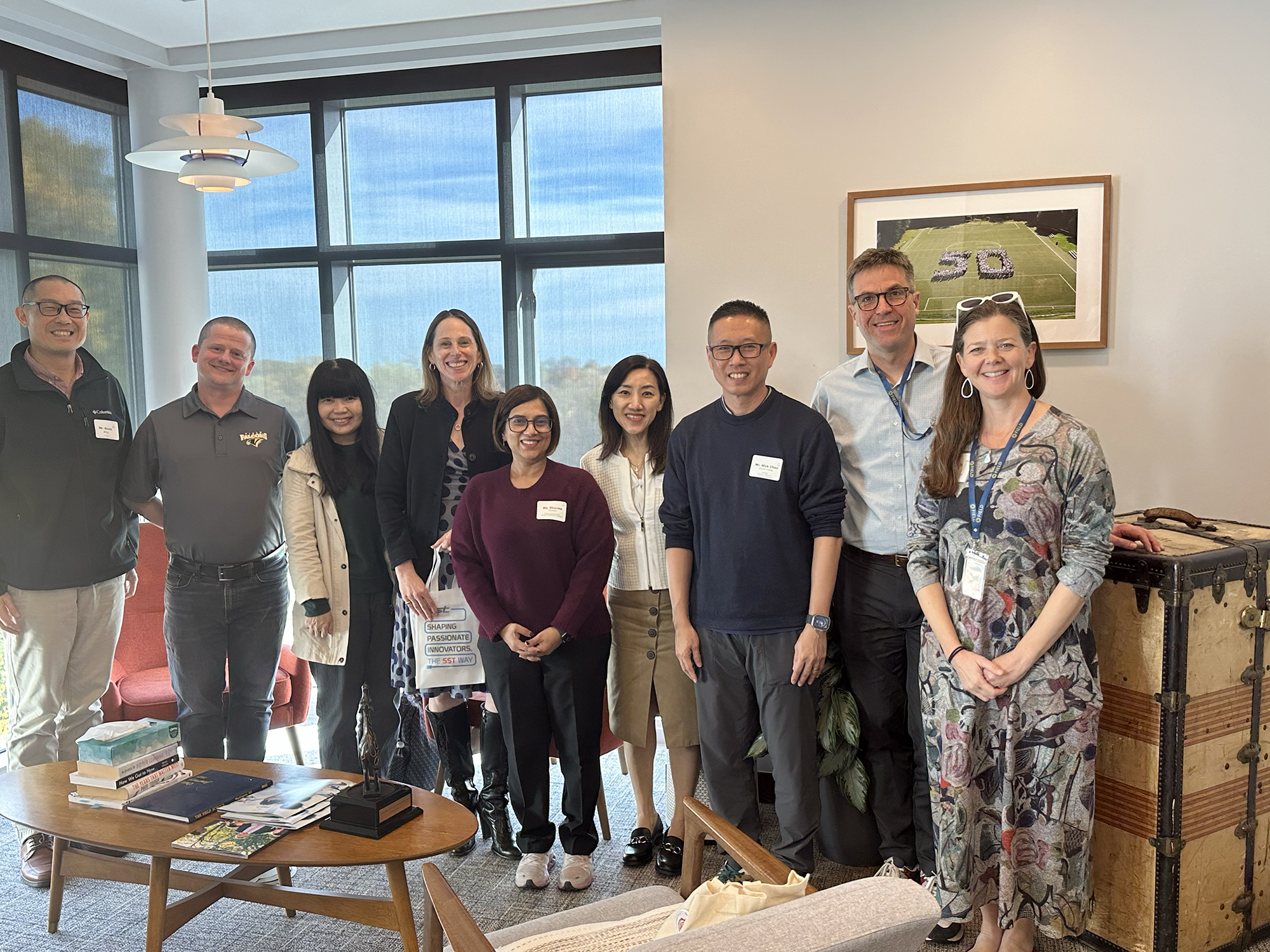
A team of school leaders from Singapore visited Field’s campus this fall through a Fulbright leadership exchange, with a clear set of questions: How are U.S. schools shifting toward more progressive, student-centered learning, and how might those models help to modernize Singapore’s national curriculum? The group explored everything from project-based teaching to mental health support and the evolving role of AI in classrooms. “The Singapore education system is really shifting,” Dean of Innovation/Science Sarah Swain explained, “They’ve been very rote, very rigid, and now they see the need for student well-being and mental health.” Singapore is now seeking ways to open pathways and access to higher education and reduce testing pressure.
The school leaders’ visit kicked off with a Fulbright alumni panel in Washington, where Sarah and fellow representatives from local schools shared how teaching and learning have changed in the past decade. Then, the group observed the student experience in Field’s classrooms first-hand. They were especially interested in how Field’s project-based, standards-based practices translate into student outcomes.
The Fulbright educators gravitated toward Field’s innovative approach to teaching, building genuine student agency, and a culture that elevates both curiosity and well-being. They asked detailed questions about standards-based grading, interdisciplinary work, and how these approaches impact college admissions. The visitors were struck by how prepared, confident, and reflective Field students were. They were especially impressed by how student-driven learning and opportunities for kids’ voices to be heard empowered students to engage more deeply. The student panel the group attended solidified that impression. The visitors listened as Field students described why they chose the school and their connection to the community as a space of belonging and a place to be themselves. They also heard candid reflections on how standards-based grading can feel new or unfamiliar, yet ultimately clarifying and supportive.
The Singapore team asked about cultivating a joy for reading, advisory, technology tools, and teacher training. The more they saw, the more they connected Field’s environment to their own national priorities: joy of learning, healthier academic pressure, and broader definitions of student success. “They were so impressed by the passion for inventive teaching here,” Sarah said.
Their visit won’t change education overnight, but the conversations the Fulbright team had at Field will travel back with them and contribute to ongoing discussions in Singapore about teaching, learning, and student wellbeing. For Field, the opportunity was a reminder of the value of being open to learn alongside educators from different contexts. As Sarah noted, “It’s important for schools not to be isolated in their own bubbles.” Hosting the scholars affirmed for Sarah that the more intentionally educators connect with other schools, locally and globally, to share best practices and findings, the better student outcomes will be.





.jpg&command_2=resize&height_2=85 "Take Time for Reflection")
.jpg&command_2=resize&height_2=85 "Approaching Uncertainty: Getting Comfortable With Saying \"I Don't Know\"")