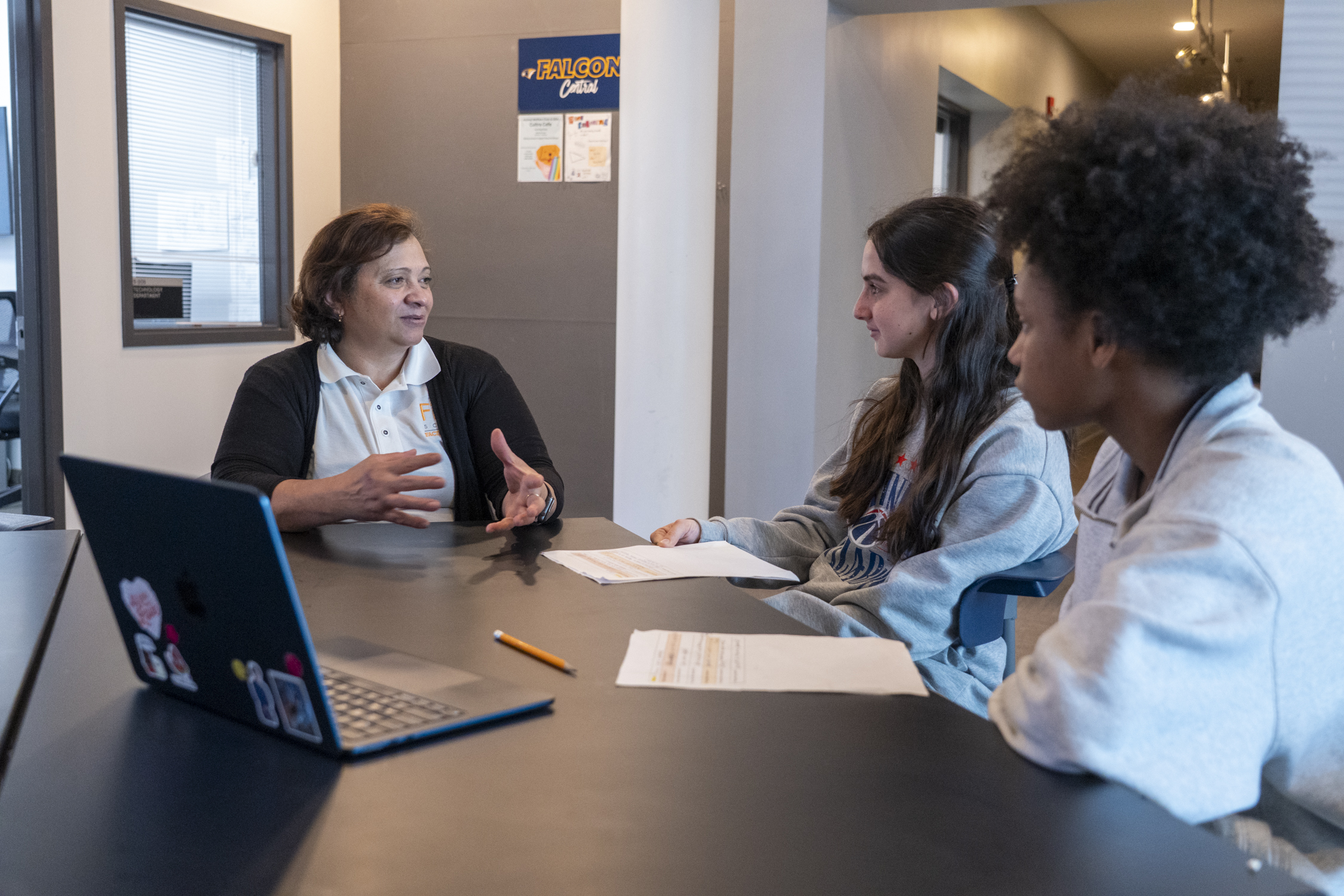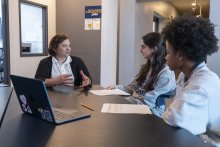
In Spanish 3, language learning moves beyond vocabulary lists and grammar lessons into authentic dialogue with native Spanish speakers outside the classroom. As part of an annual interview project called The Voices of Field, students step into real conversations with both faculty and students to use Spanish as it’s actually spoken. For many, it’s their first time holding a sustained conversation entirely in Spanish with someone they may not already know.
Students begin by preparing their interview questions around six core topics: personal origins, childhood memories, family, culture, traditions and celebrations, and free time. This preparation requires them to practice not only how to formulate questions in Spanish, but how to listen actively, respond authentically, and create follow-up questions on the spot. With this framework, throughout the interview, students build conversational fluency that extends beyond scripted exchanges.
The experience is intentionally designed to stretch students’ confidence while supporting their growth. Students work in pairs, select their subject, and record their interviews. Many students come away surprised by how much they comprehended. They build confidence with the awareness of their language skill building in real time as they use Spanish as a tool for connection, curiosity, and mutual exchange.
After the interviews, students synthesize what they’ve learned into visual displays that are set up for the community to see in the Meeting House. These posters highlight stories about family traditions, cultural celebrations, and daily life in different countries, making visible the voices and cultural backgrounds of our community members. The display becomes a powerful testament to the Field community, complete with a wide range of lived experiences and cultural histories.
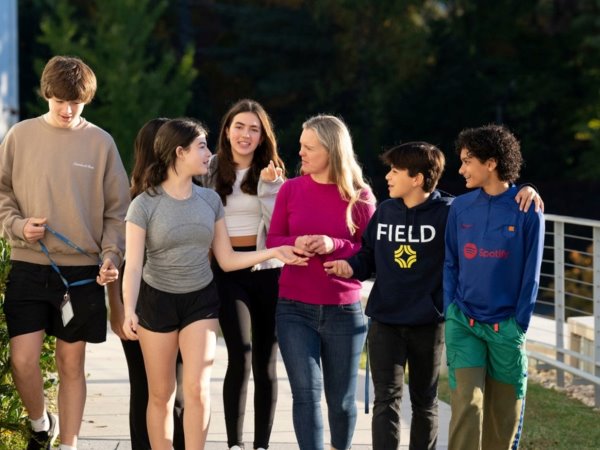
The Voices of Field project also serves as a stepping stone toward future immersion experiences. After completing Spanish III, students become eligible to apply for international travel and other opportunities. This project reflects what authentic learning rooted in the world around us looks like. By engaging directly with members of the community, students practice meaningful challenge, develop empathy, and see themselves as participants in a diverse, interconnected learning environment.