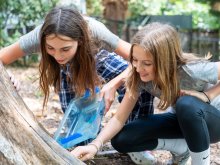
How do you build a miniature ecosystem that can sustain itself? That is the question that Robert Haas' 7th-grade science classes explored in October. When they started their ecology unit, they had no idea what to expect––but through hands-on immersive learning they gained a greater understanding of how ecosystems operate.
Students were tasked with building a closed terrarium system that could keep a colony of spiders alive for an entire month. To start, students spent time in the wooded areas around campus, searching for spiders and other elements that represent a natural environment, such as dirt, plants, branches, etc. If they couldn’t find enough spiders at school, they were allowed to bring some from home. Once they collected these different elements, the terrariums were sealed shut and they could not make any changes.
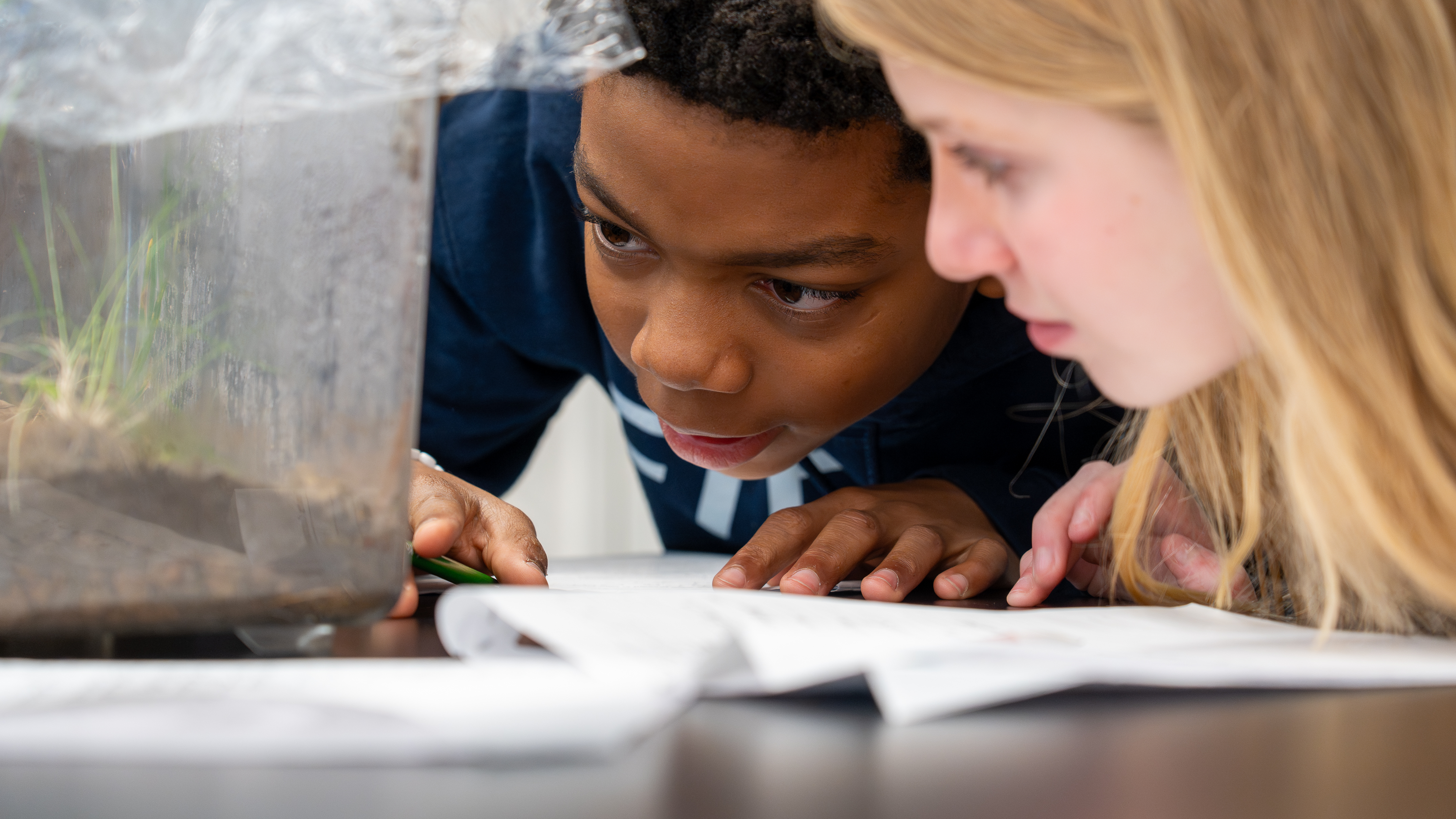
Throughout the month, students made frequent observations and recorded data on how the spiders and other organisms in the terrarium were doing. The results were widespread: some students’ spiders died quickly, some went missing, and others were alive and well.
This is Robert’s 5th year doing this experiment, and he says the challenges that students face are consistent from year-to-year: the students don't bring enough food for the spiders, they underestimate how difficult spiders are to find, capture, and contain, and they don't plan adequately for the plants and other natural elements in the terrariums.
But those challenges are what make this learning opportunity so meaningful. The instantaneous, tangible results help students understand concepts, such as the collapse of an ecosystem, that could otherwise feel abstract in a lecture setting. “An ecosystem with only spiders in it is not sustainable and would collapse very quickly,” Robert said. “And they [students] start thinking about, well, what does it mean if we remove this animal or this plant from an ecosystem, or what if humans come in and disrupt the ecosystems, or what if we introduce an invasive species—how disruptive that can be.”
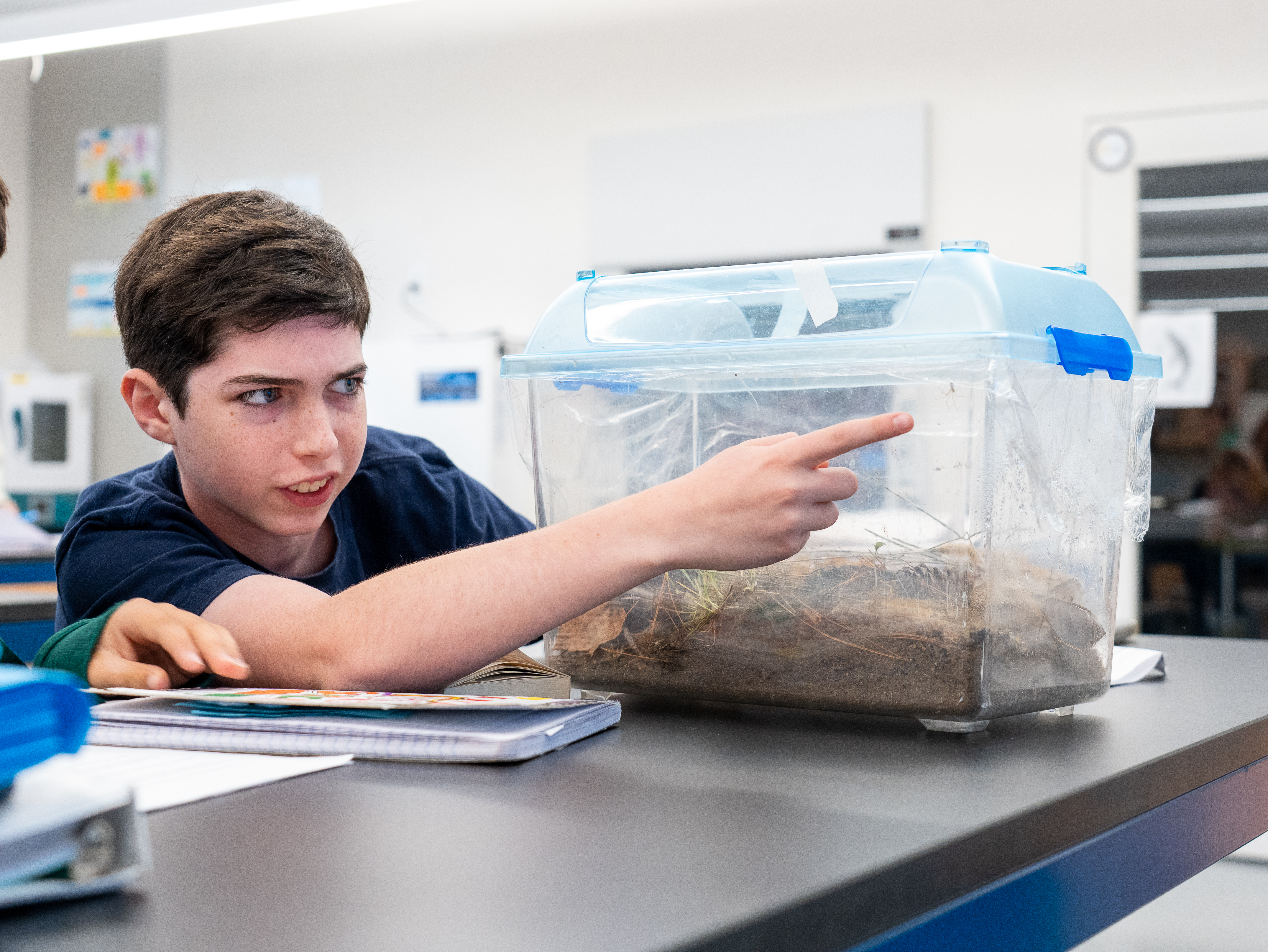
The transformation Robert sees each year is one of his favorite parts of the project. When students first learn they'll be hunting for spiders and handling them, the initial reaction is predictable: anxiety, apprehension, and lots of comments like “this is gross, ew.” But something shifts after just a couple of observations. “Even the kids start finding it interesting and realizing they have never looked closely at a spider before and how important they are to an ecosystem,” Robert said.
For Robert, the power of this project goes far beyond just teaching students about ecology. It's about the emotion and the memories—gathering dirt and plants, overcoming the fear of spiders, laughing with friends as they try to catch one more spider before the terrarium is sealed shut.
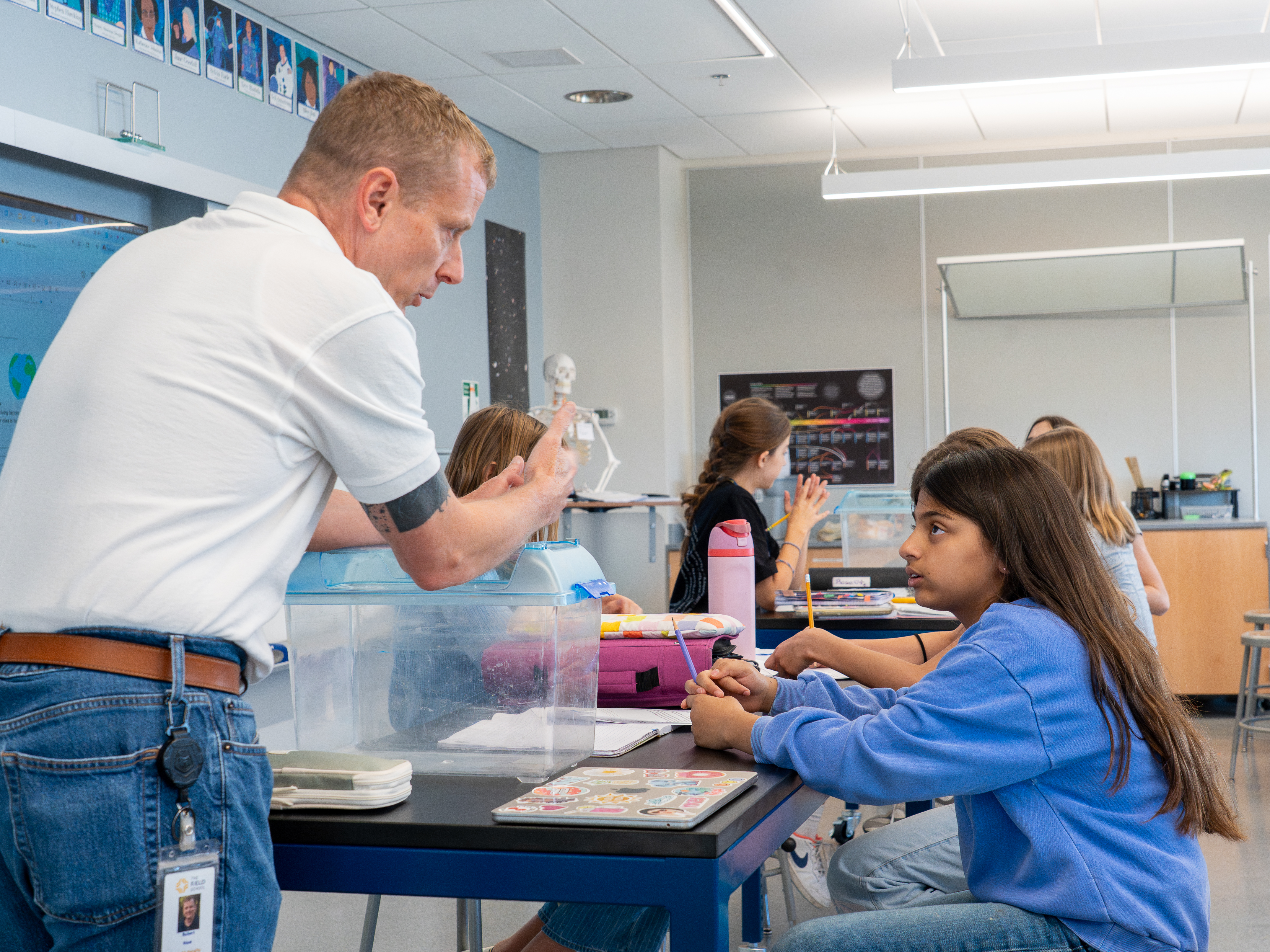
“I love this project so much because I get to see the kids engaging with it, and it awakens, in the kids, this childhood fascination with the way that nature works and the way that critters work,” Robert said. “And it awakens a care for the environment, which is something that I am very passionate about and is difficult to convey in words alone.”




.jpg&command_2=resize&height_2=85 "Graphing Quilt Blocks in Middle School Math")


