What happens when you place the fate of the world in the hands of 6th graders? During Intersession, students are challenged to think like world leaders, diplomats, and problem-solvers through a unique simulation experience—The World Peace Game.
The game was invented by award-winning educator John Hunter, who taught Field’s Middle School Director Gil Gallagher how to play 15 years ago. While the game was originally designed for 4th graders, the version played at Field involves much more complicated economic models and mathematical thinking. “It is a global economic, military, and political simulation that is a cross between Model UN, Risk, Settlers of Catan, and Dungeons and Dragons,” Gil says.
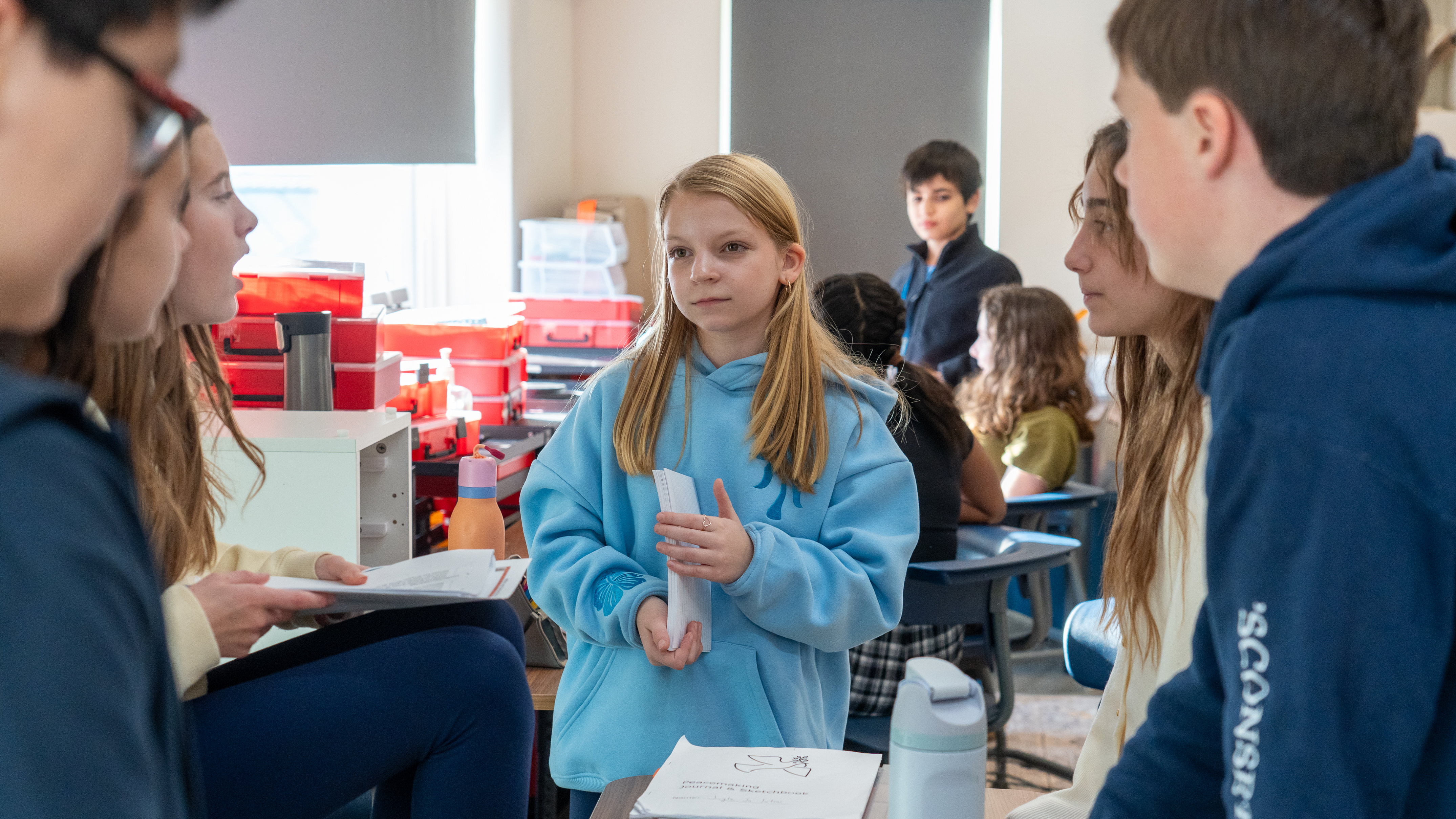
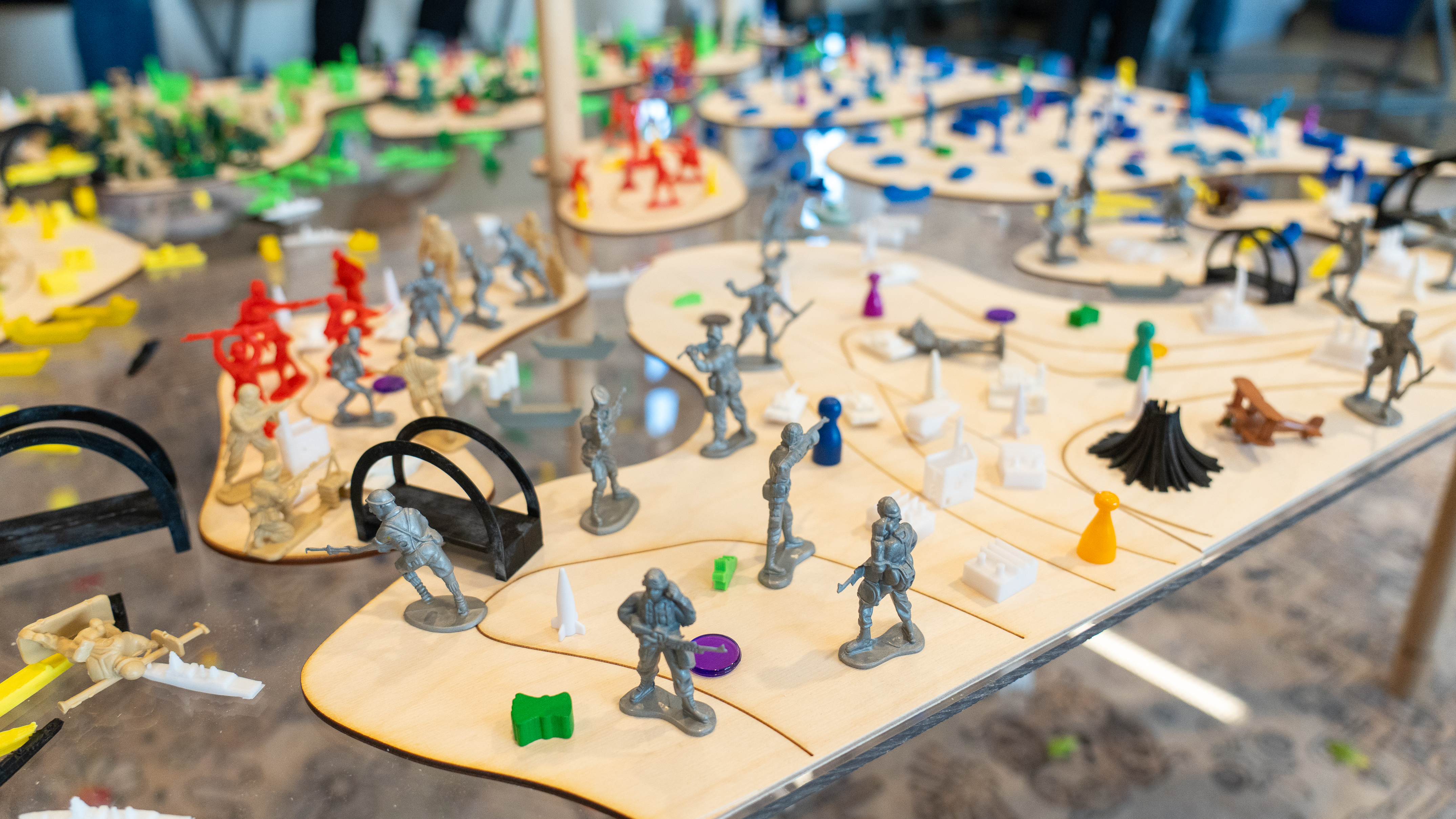
The World Peace Game is played over the course of several days as students take turns serving as leaders of four different nations. Each day begins with declarations, in which the leaders announce military moves, political alliances, and other decisions. Following the declarations, there are several rounds of negotiations as students attempt to solve the 25 crises introduced at the beginning of the game.
The faculty organizing the game intentionally keeps the crises from resembling real-world issues, which allows students to develop their own solutions rather than relying on their knowledge of current events. The game does, however, center on some familiar challenges such as adapting to climate change, living in an interconnected global economy, and finding common ground between people with different beliefs and values.
The beginning of the game can be overwhelming, and Gil says students respond to this challenge in various ways. “In my experience, students frequently nibble around the edges as they develop a feel for how the game works,” Gil explains.
Students must make economic, political, social, and ethical decisions throughout the game—some are built into the conditions, others are created by fellow players. They face challenges ranging from balancing competing national and international priorities to pursuing technologies that might solve problems but create others, constantly balancing the reality of cost and impact.
The most difficult aspect of the game is long-term planning because students initially approach problems in a linear fashion. It can also be hard for them to move past their initial allegiance to their nation or organization to see the big picture. “It is usually the case that at some point students feel like there is no possible way that they can win, and that is usually when they dig deep and find some interesting and useful way to break through and find compromised solutions,” Gil says.
Between built-in surprises, random cards, a student saboteur, and added complexity—the game is always unpredictable. As Rose ’32, who plays the weather deity, put it this year: "No one wins unless everyone wins."
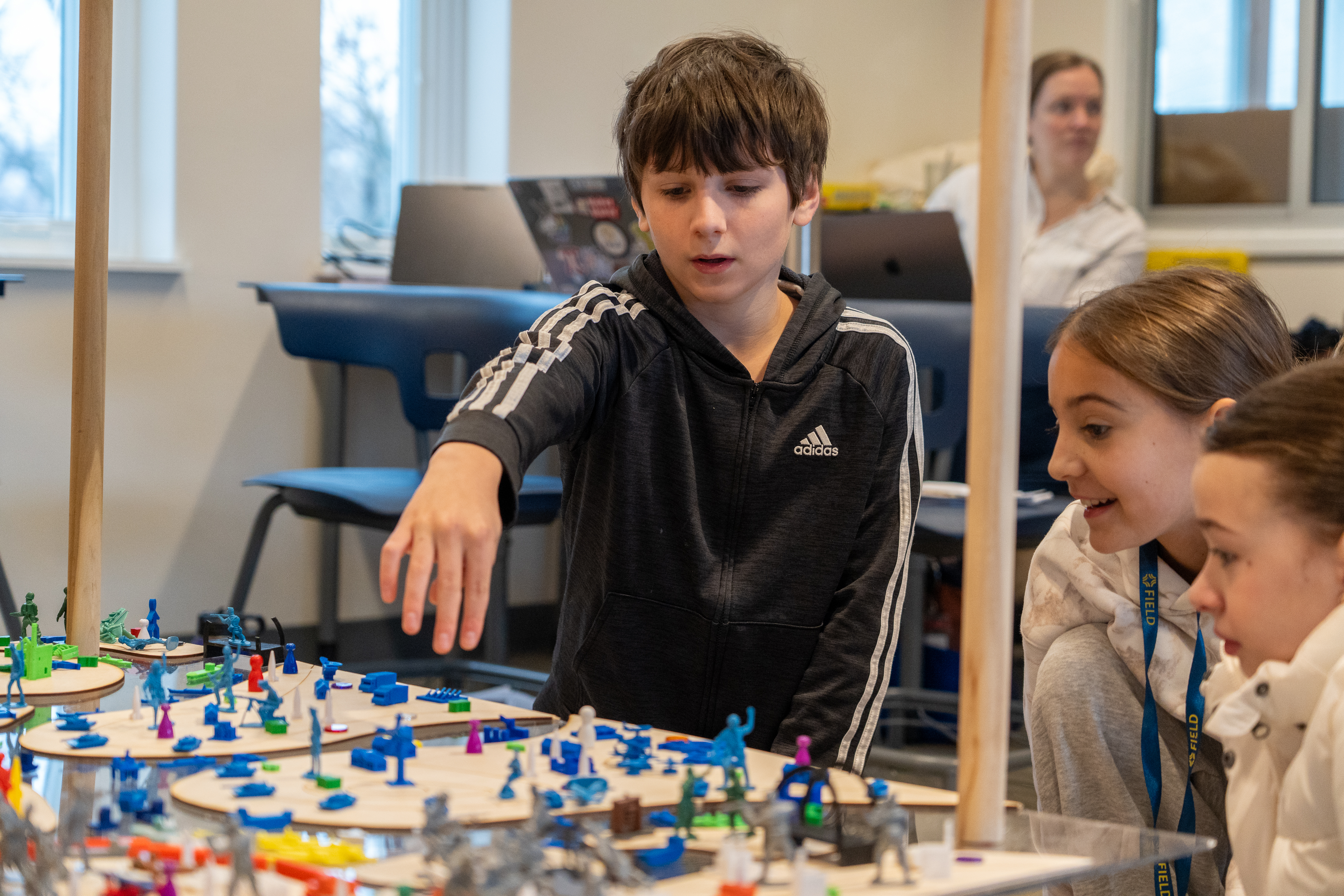
The game’s ultimate lesson is about interdependence—helping students understand that we live in an interconnected world and that to really address problems, they must be viewed in context and with a broader view of the world in mind.
“One big takeaway I had from the World Peace Game was how amazing it was to see how much we progressed over just a week and a half! I learned more about my peers. The experience of being a reporter and writing for The World Press for the first time in all of game history made me feel so appreciated,” shared Mackenzie ’32.




.jpg&command_2=resize&height_2=85 "Nate ’27 Wins Silver Medal in Scholastic Arts Competition")


.jpg&command_2=resize&height_2=85 "Students Design Legacy Posters for Civil Rights Journey")


