.jpg?command_1=resize&width_1=220 "Students Design Legacy Posters for Civil Rights Journey")
"I think the value of this trip is showing the real history. Because across the United States, [Civil Rights] history either isn't taught or it's watered down. So being able to go to these places first-hand and see the uncovered history—I think that was the biggest thing. This actually happened. ” ~ Jaedyn ’25
There is a distinct difference between reading about history and experiencing it. Each year during Intersession, students in the Civil Rights Journey class travel to Atlanta and Alabama to uncover the difficult truths about this tumultuous history, and the impact of this experience goes far beyond what they learn in the classroom.
In Atlanta, students sit in the pews of Ebenezer Baptist Church, where Dr. Martin Luther King, Jr. and his father preached. In Montgomery, they stand on the steps of the Alabama State Capitol, where the pivotal March to Montgomery ended. In Selma, they retrace the steps of marchers who were beaten on “Bloody Sunday.” At The Legacy Museum, they stand before a hologram depicting a young African boy behind bars, crying out for his mother.
At each stop in their journey, students deliver a large poster, created by their peers in Tim Lane’s Digital Concentration: Print Design class. These gifts honor the Tuskegee Airmen, Georgia Senator Raphael Warnock, the victims of the 16th Street Baptist Church bombing, the Southern Poverty Law Center, The Freedom Riders, and the people who marched across the Edmund Pettus Bridge. It’s an exchange, which highlights Field’s philosophy for experiential learning: students do not just learn from these communities and landmarks—they give back to them.
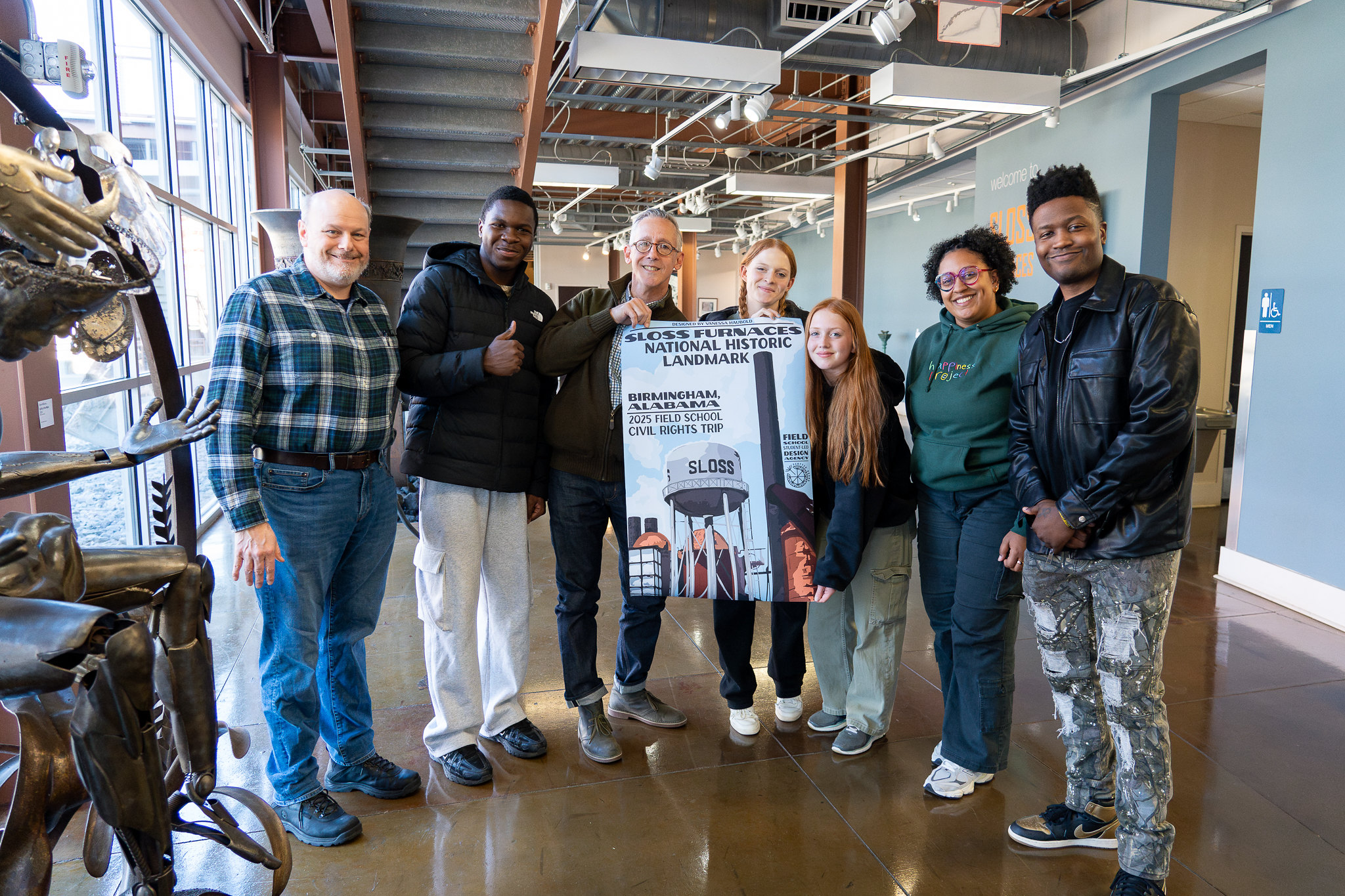
(Civil Rights Journey students present legacy poster to Sloss Furnaces in Birmingham, Alabama in 2025).
This partnership between the Digital Concentration and Civil Rights courses began organically in the Fall of 2024 during a conversation between history teacher Bishop Walker and Lily ’25. Inspired by a poster she created for a veterinary clinic in her Digital Concentration class, Bishop asked if she would be willing to design something for his African American Studies class. This opportunity quickly evolved into a collaboration that capitalized on the structure of Digital Concentration, which operates as a student-led design agency called Scatter Brand. The Civil Rights Journey poster project was officially born.
Each year, Bishop meets with Tim’s class to make his request as a client. His vision is to curate commemorative posters celebrating key Civil Rights landmarks and people that students could present as gifts on their trip. Tim’s students break into teams, each with a team lead managing assignments and workflow. Their first task is to research their assignments and learn about aspects of Civil Rights history unfamiliar to them.
“The students are idea machines,” Tim said. “They’re really good at the research piece, they get it done.”
The final six posters featured Dr. Martin Luther King, Jr. and the city of Selma; the Tuskegee Airmen; Ebenezer Baptist Church honoring Senator Raphael Warnock; resilience in the time of struggle and the power of Black women for The Southern Poverty Law Center, Diane Nash of The Freedom Riders, and the four young victims of the 16th Street Baptist Church bombing in Birmingham.
The posters share a distinctive visual style—a layered, cut-paper aesthetic with bold colors and robust typography. Each one showcases the student designer’s name.
Jamie ’28, who served as team lead for the 16th Street Baptist Church poster this year, described the challenge of balancing visual impact with respectful presentation. “I learned that clarity and visual appeal are not always the same,” he said. “Just because something looks accurate or realistic does not mean that it will translate into something eye-catching or effective. For this project, we did not want to just faithfully recreate photos. We wanted to interpret them in a visually impactful way while making sure that the people in the photos were still recognizable.”
Managing the workflow added another layer of complexity. “A big part of my job as team lead was to manage assignments and pick up slack where needed,” Jamie said. “The most rewarding part of the project was watching all the pieces of art come together in a final way that fit together perfectly.”
William ’27, who designed the Ebenezer Baptist Church poster, reflected on the freedom to work in ways that made sense for each individual. “I learned that there are a lot of different ways to approach a single style, and it is important to approach it in a way that makes the most sense to you, not the techniques that are most commonly used or what others in the project are using,” he said.
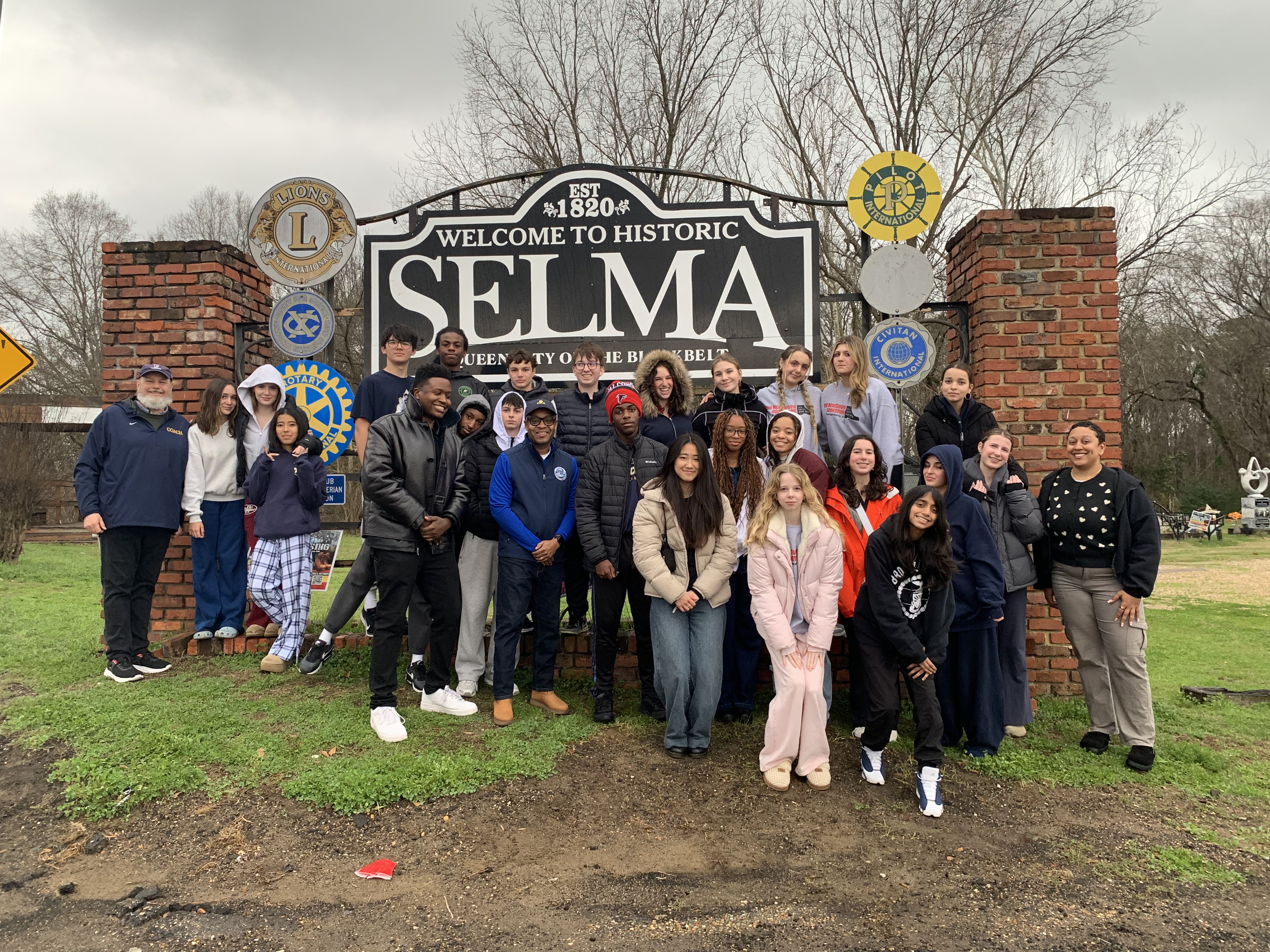
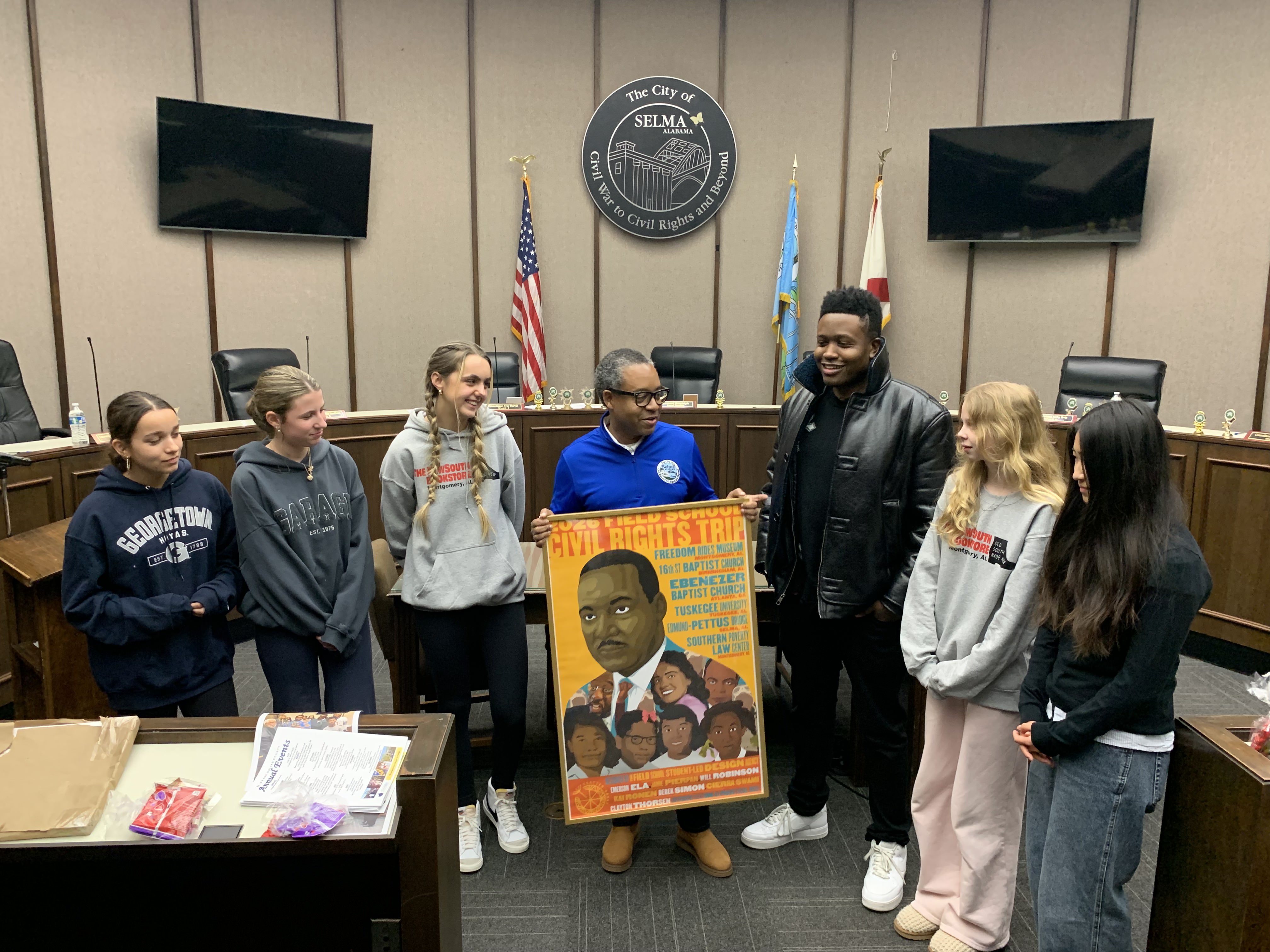
When students on the Civil Rights Journey visited Selma, they had the honor of walking across the Edmund Pettus Bridge with Selma Mayor Johnny Moss III. Prior to the walk, they presented him with the poster depicting Martin Luther King, Jr. and other marchers. The Mayor promptly hung the poster in his office. “Selma is not a huge city, but within African American history, it is one of the most historically Black cities in this country,” Bishop said. “I really want our community to understand the significance of not only walking on the bridge with the Black mayor of Selma but having a piece of representation of The Field School in that office.”
This representation is what Field’s Dean of Innovation, Sarah Swain, says is emblematic of the School’s approach to experiential learning. “It’s not just passive consumption,” she said. “We’re not coming in with ideas like we are going to solve problems—we’re providing something of benefit, value, respect, and appreciation.”
William ’27, who went on the trip as a freshman, spoke to what makes the experience meaningful. “Being in a space where real history and where real people are impacted is amazing, and being able to have your work displayed there is a great way to translate passion and understanding for the history into art that hopefully encapsulates the impact of what has happened there.”
For Bishop, the project represents something worth preserving. “I just hope now that it is in the books, even if it is not an every year thing, it is now engraved in this history of the institution.”
The impact of this project is felt throughout Field, which Tim said is a testament to Bishop’s passion for his work. “What you have done with all of this—the word is authentic. There is so much heart. The students, they breathe that,” Tim said.
That authenticity from our faculty at Field creates a virtuous cycle. “If authentic things are happening—due dates, challenges, opportunities—then you start having these connections that lead to other authentic learning opportunities,” Sarah shared.
The collaboration on this project will continue to evolve. Next year’s vision includes adding QR codes to the posters to link video interviews, potentially with family members of people who were present during some of these historic Civil Rights moments.
.jpg "Students Design Legacy Posters for Civil Rights Journey")



.jpg&command_2=resize&height_2=85 "Nate ’27 Wins Silver Medal in Scholastic Arts Competition")


