What do books like Parable of the Sower, Beloved, Catcher in the Rye, and Pet Sematary have in common? Somewhere, at some point since 2020, they have been banned or restricted in their access and use in public spaces like libraries and schools. Banning and restricting books is on the rise in the US, with 2025 being the highest on record for censorship. The American Library Association Office for Intellectual Freedom documented 5,668 books banned from libraries, and 920 books censored through access restrictions.
Eleventh-grade English students dive into the practice of banning books for their capstone project, exploring a question that feels both immediate and complex: What social anxieties or other factors contribute to the restricting of books from public access?
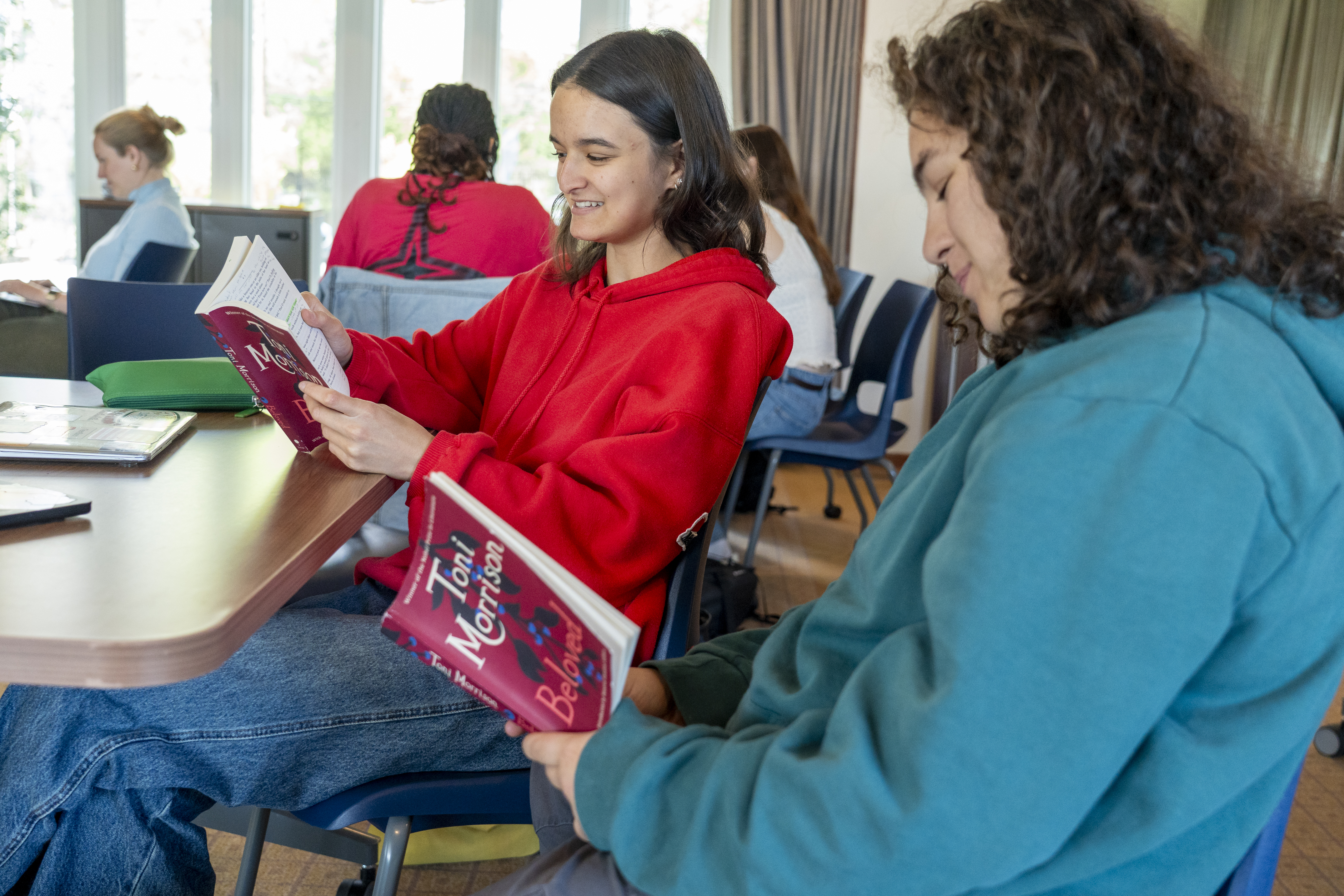
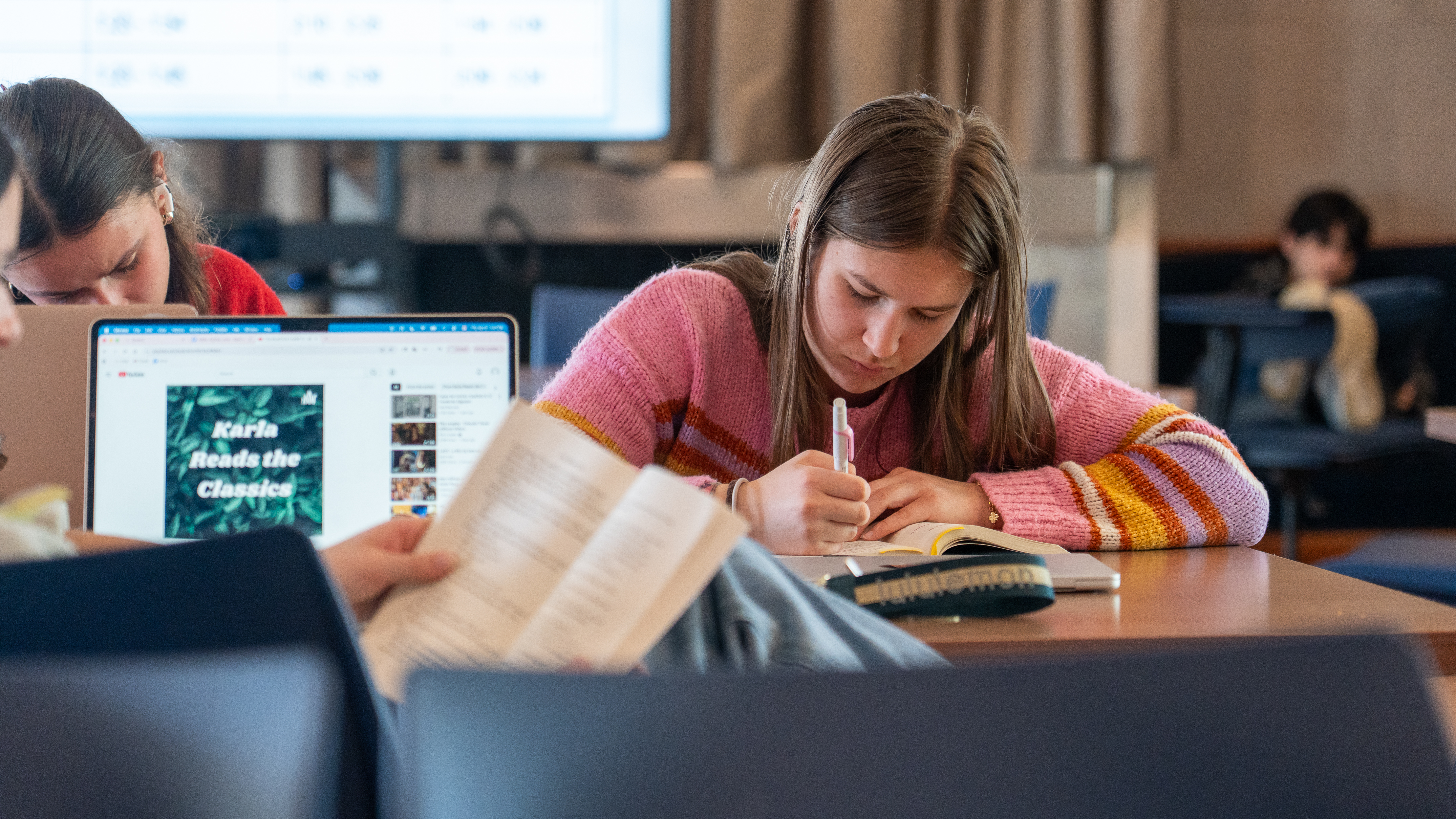
Students begin by selecting a book that has been challenged or restricted somewhere in the United States. From there, they build their own path by reading deeply, engaging in discussion groups, researching the specific community where the book was contested, and investigating the legal, cultural, and social forces that shape why a book is challenged.
“I chose to read and analyze The Handmaid's Tale by Margaret Atwood. I was drawn to choose this book because, firstly, this project gives us a chance to pick something we want to read… Secondly, and perhaps more importantly, I knew that the book addressed the topics of Christian radicalism, theocracy, misogyny, control and power, and others,” says Teddy ’27.
Students read legislation and news articles. They examine census data. Some elect to reach out to public officials for comment, practicing thoughtful correspondence writing and developing questions that invite dialogue. As students build their understanding, they learn how to navigate and evaluate various sources of information, distinguishing misinformation from credible reporting, separating opinion from fact, and exploring the roots of bias.
As a basis for this project, students are challenged to unpack and explore the arguments presented by both sides, avoiding generalities and citing actual speeches, law, publicly stated positions, and even social media posts. Each side is represented honestly. English teacher John Cichello says, “To truly argue, you have to present various angles in their best light. What we're encouraging is that you have to embrace that argument in its best light with not only empathy, but a presumption of goodwill on the part of people making the argument, even if that's hard for you to believe.” He thoughtfully guides students away from straw man arguments and strong reactions, toward building an authentic understanding of opposing views, so they can later present opposing viewpoints as real arguments shaped by real concerns.
Using the presumption of goodwill creates a palpable shift in classrooms. Driven by curiosity, students ask different questions, inviting a more nuanced evaluation of the context in which people consider banning a book. Who lives in this community, and why might their concerns differ from mine? What experiences shape the way people see this issue? What am I missing?
Maya ’27 reflects, “As a reader myself, I have found that novels like Beloved are not just interesting and captivating; they are a form of art and expression that cannot be found elsewhere, shifting the question from ‘why should we ban this book’ to ‘how can we read this book.’”
Engendering curiosity, “which is absolutely the root of all empathy,” says English Chair Kevin Ford, “sparks more and more questions and makes them better citizens.”
Many personal connections emerge for students when projects are rooted in relevant, timely subjects. For Field 11th-graders, these connections reframe the project in terms of identity, access, and voice. They reflect on what it means to be a young person discovering ideas and who gets to decide what those ideas can be.
Kevin says students realize that if they lived in a different community, their experiences might not have been possible. “It feels like a greater affront to how they view themselves as agents in the world, as young intellectuals,” he says. Cole ’27 affirms Kevin’s observation, “...reading Parable of the Sower changed my perspective because even though the book is great, knowing that I am lucky enough to even be able to read the book made it feel more significant and special to be able to do.”
For the culminating piece of this project, students present their research findings and argue for how and where their chosen book should exist in the world. Some students propose that a book should be part of a school curriculum. Others believe their book belongs in libraries but not classrooms. Some take more nuanced positions, balancing literary merit, audience, and context.
After reading The Bluest Eye by Toni Morrison, and I Know Why the Caged Bird Sings by Maya Angelou, William ’27 says, “This project pushed me to read with greater purpose, looking beyond the story itself to understand not just its significance, but the deeper reasons to why it was written. It encouraged me to consider the historical context, personal experiences, and perspectives that shape any text I engage with, ultimately making my reading more thoughtful and meaningful.”
What matters most is how students arrive at their conclusions, weighing the evidence, engaging in complex and nuanced debates, and learning to hold multiple perspectives simultaneously. They gain a stronger sense of themselves as thinkers and as participants in communities that tackle these questions and a renewed relationship with reading.
Gailie ’27 affirms, “This project has helped me develop a deeper appreciation for reading by giving me the chance to engage with books on multiple levels. Through literary analysis, research, and discussions with others, I was able to better understand the book while also gaining new perspectives.”



.jpg&command_2=resize&height_2=85 "Nate ’27 Wins Silver Medal in Scholastic Arts Competition")


.jpg&command_2=resize&height_2=85 "Students Design Legacy Posters for Civil Rights Journey")


