The monuments on the National Mall can often feel like a fixed part of the D.C. landscape. We pass them every day on the way to school or driving to work, without giving them a second thought. They are woven into the identity of the nation’s capital and are used as symbols to illustrate D.C. In reality, these landmarks are snapshots in time that represent how a specific generation chose to remember a person, an idea, or a moment in American history.
Students in Scott McLetchie’s 8th-grade history classes are exploring the idea that history is not fixed. Through extensive research in the classroom and in the field, self-reflection, and a collaborative design process, students each created a new monument for the National Mall. Their goal: to tell a story that they feel is currently missing and reflects the values of America today.
The preparation for this project began earlier in the school year, when Scott introduced students to the concept of historical evolution by looking at the National Statuary Hall Collection in the U.S. Capitol. They examined Virginia’s decision to remove the statue of Robert E. Lee and replace it with one of Barbara Rose Johns, a teenage activist whose lawsuit became part of the Brown v. Board of Education decision. Their initial investigation laid the foundation for the monument project, showing students a direct correlation between what we choose to honor and what we think matters. “Conversely, a lack of monuments to a particular topic or group of people reveals something as well,” Scott added.
To better understand how monuments depict certain values, students conducted their own research and created travel brochures that described the history of the monuments on the Mall and the messages that they communicate.
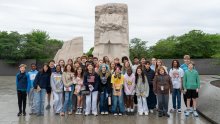
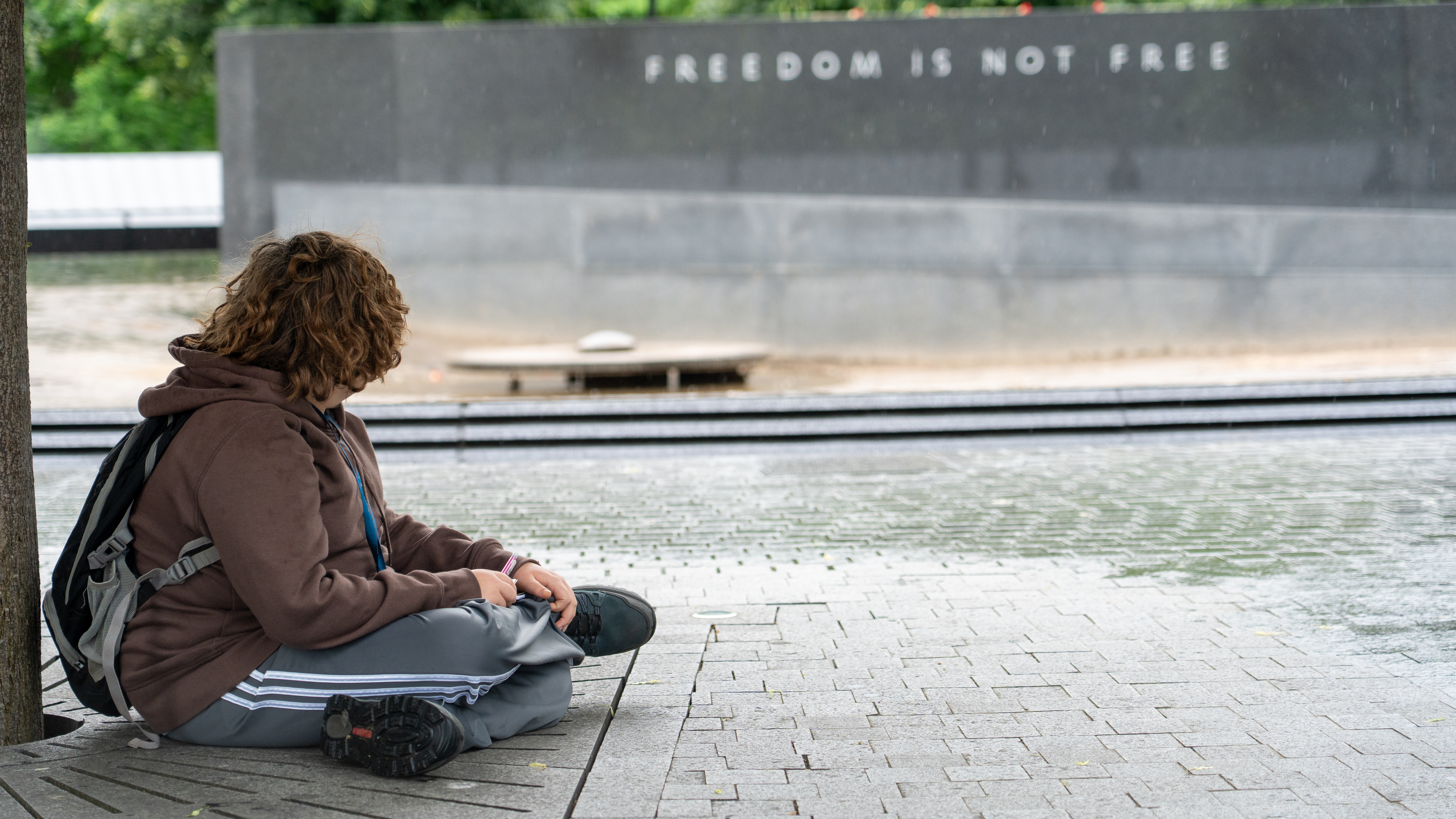
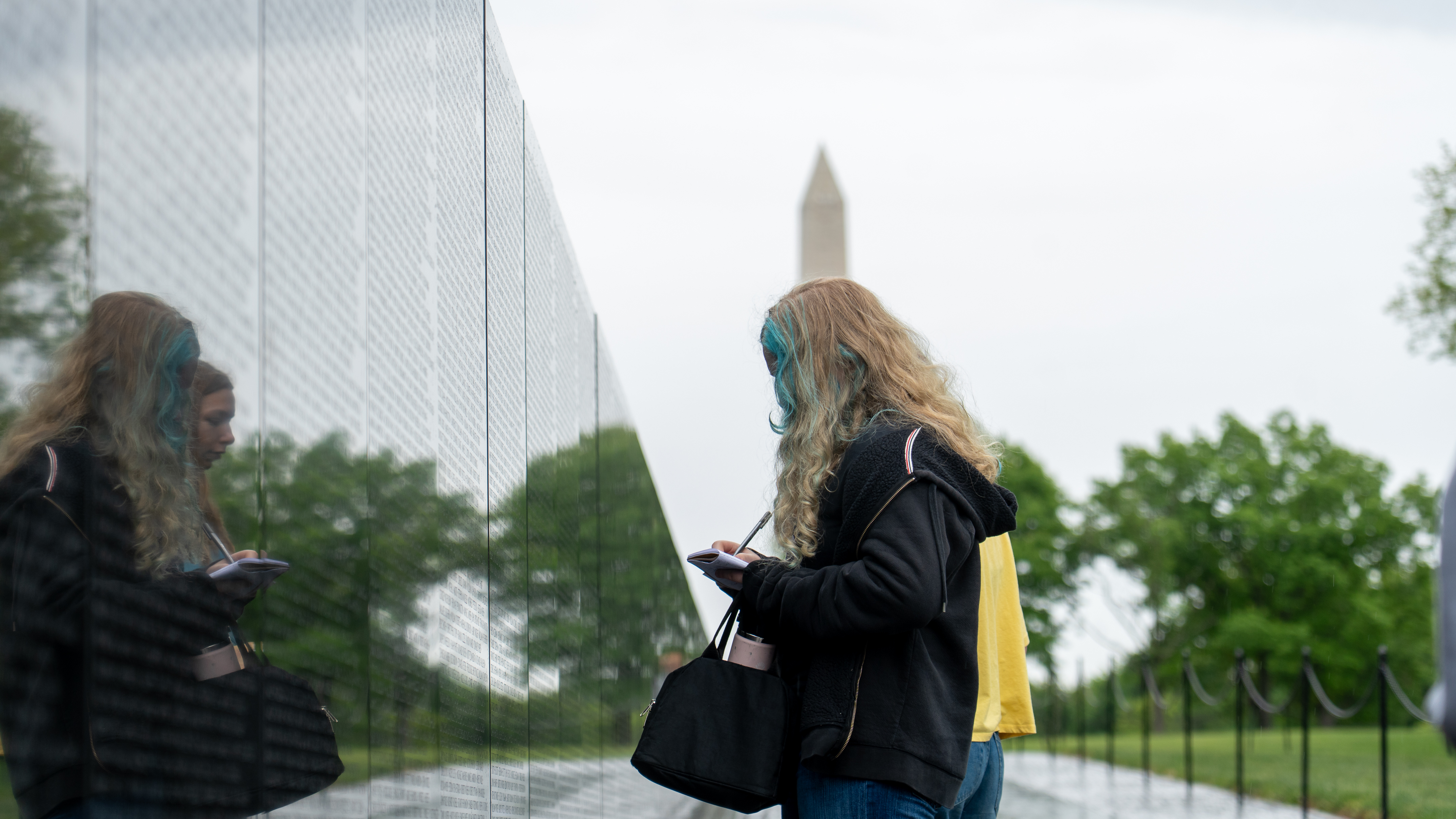
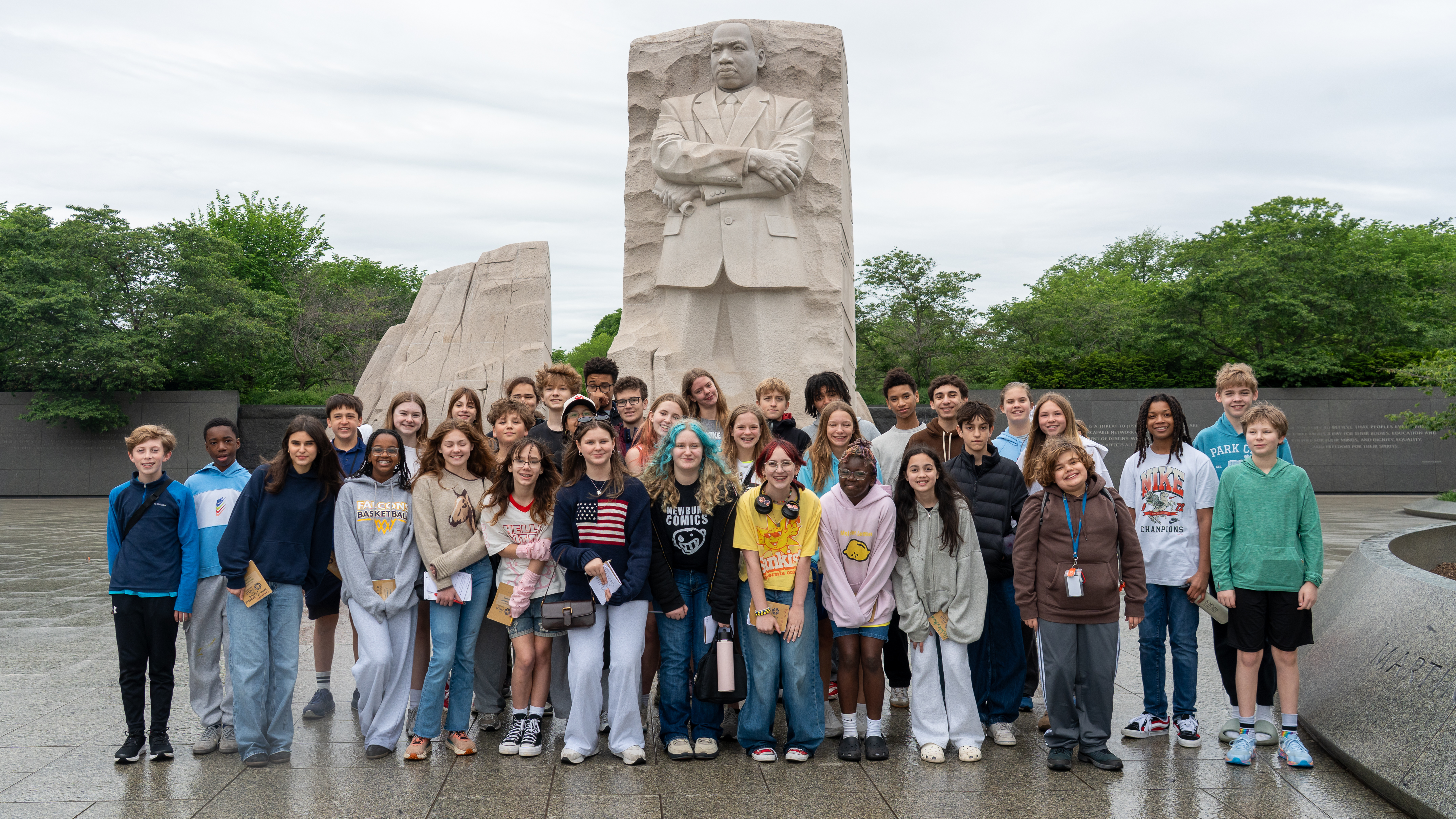
Following their initial research, students visited the National Mall to experience the Lincoln Memorial, the Martin Luther King, Jr. Memorial, the Vietnam Veterans Memorial, and others. They used a journal to document what they saw and what they felt the monuments represented. During this field trip, they also started to envision what is missing from the Mall and where a new monument could fit.
“It kind of gave me a better sense of how connected it all was and how we memorialize different things,” Timo ’30 shared.
Once each student settled on an idea for their monument, they expanded their research using resources at the Smithsonian and the Library of Congress. Scott says he was blown away by the level of detail and thought that students put into their monuments. “I've particularly been impressed that many of them are using what they've learned in other classes, about the experiences of marginalized people whose stories are rarely told, or have even been actively suppressed, at the national level,” he said.
Jailene ’30, for example, created a monument depicting immigrants in America. The design, complete with a brass finish and several key scenes, depicts a group of immigrants holding up the earth, symbolizing teamwork and how everyone’s contributions to society are important. In the corner, you can see children playing away from the action, illustrating the preservation of childhood innocence. Jailene also included a couple dancing, showcasing the vibrant cultural contributions that immigrants bring to America.

“I chose this topic because I don’t feel like on the National Mall there is anything really tied to immigration, and I kind of questioned myself on that. I think it is really important to include that,” Jailene said.
Other students chose to memorialize Hurricane Katrina, women who have served in wars, the LGTBQ community, and many others.
Timo ’30 decided to honor engineers because it’s a topic that he finds interesting, and despite the group’s significant contributions, they are not memorialized.
Once students developed and sketched their designs, conducted peer reviews, and drafted proposals explaining why their monuments should be added to the Mall, they turned to AI to help bring their designs to life. They created layouts and realistic renderings of their ideas using highly detailed and tailored prompts.
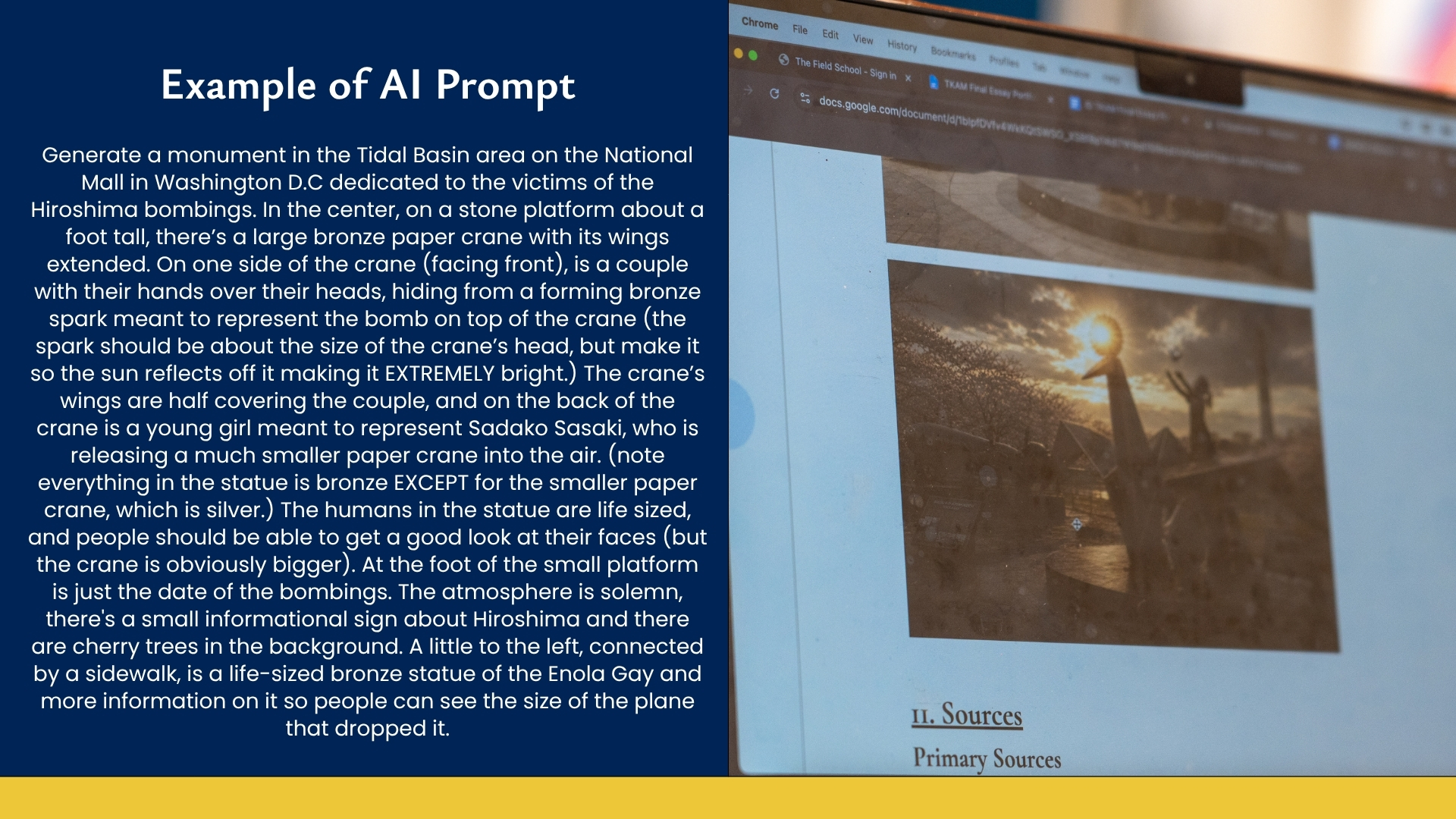
Scott says the AI portion of this project served as a support tool in their designs. Learning how to prompt was challenging as students wrestled with not just giving the tool the task, but adding context and details. “And even then, they realized that AI isn't perfect: most of them had to revise their prompts, their thinking, in order to have the AI program give them what they wanted. We turned to AI only after putting in a lot of work and a lot of thought,” Scott shared.

Throughout this process, students started to ask: What does it take to actually bring a new monument to a community, and who has the power to make it happen? They were surprised to learn that ordinary people, even eighth graders, can change the way we tell America’s story. This realization reframed the way they understand agency and how to make their voices heard.
“They [students] were somewhat shocked to learn that Maya Lin was only 21 when she won the design competition that resulted in the Vietnam Veterans Memorial,” Scott shared. This monument project also follows their unit about the 60s, 70s, and 80s, where they examined how young people led movements for social change in the United States.
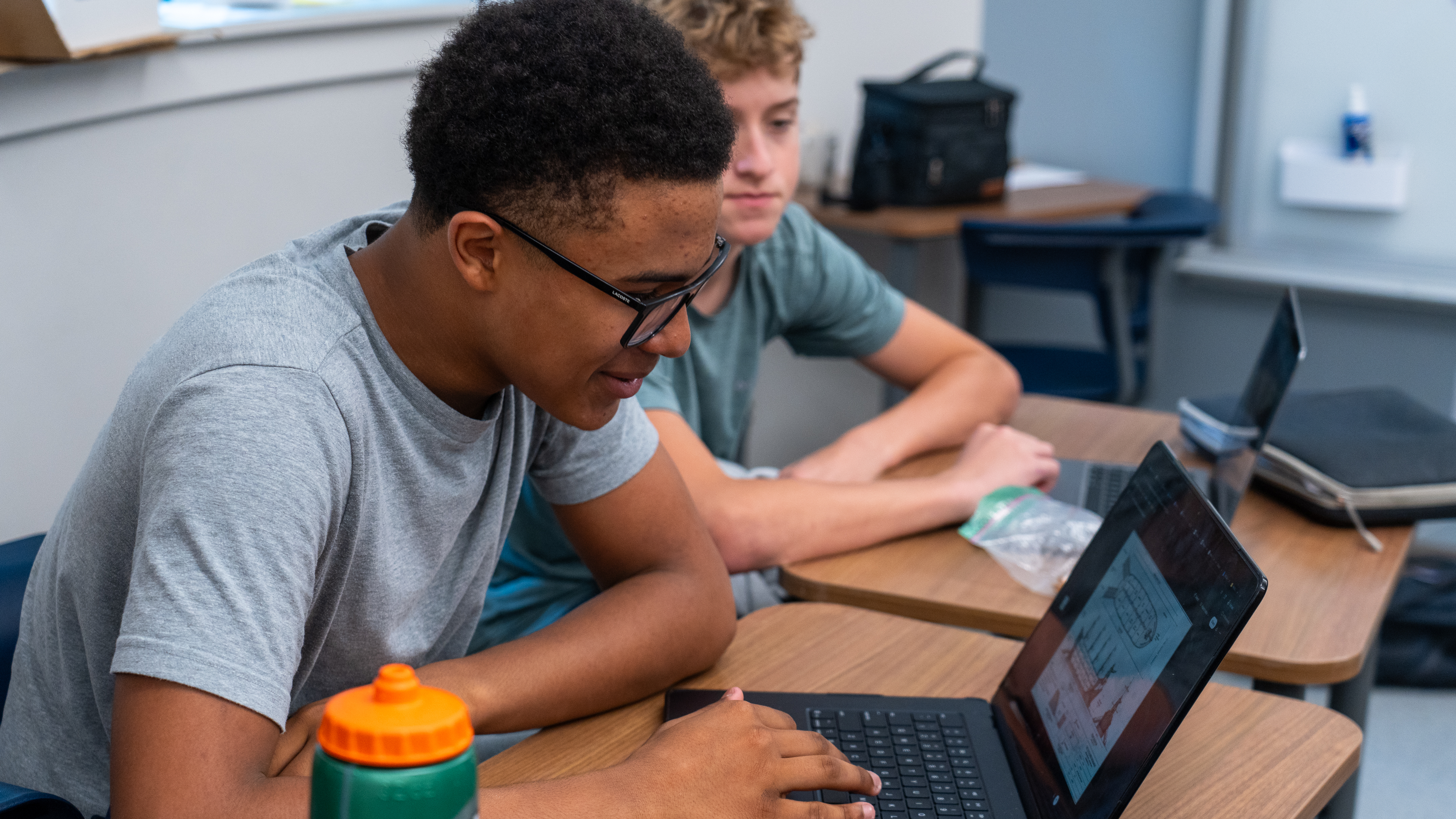
Scott hopes that this project not only inspires his students to be curious, but to actively observe and ask questions:
“I hope they've become more curious about the landscape through which they move on a regular basis, that they will stop, look at monuments or statues, and wonder why they are there, and then do some research to find out,” Scott shared.



.jpg&command_2=resize&height_2=85 "Graphing Quilt Blocks in Middle School Math")


