By Sam ’29 and Jewel ’28
When writer and civil advocate Pete Davis speaks about civic engagement, he does not speak about it the way one might expect. If everyday people were asked, “What is civic engagement?” they would most likely respond that it means being involved in government, voting, attending meetings at City Hall, etc. However, Pete looks at civic engagement through a broader lens, citing that being involved in a community is an important act of civic engagement. And when we are civically engaged, we deepen democracy.
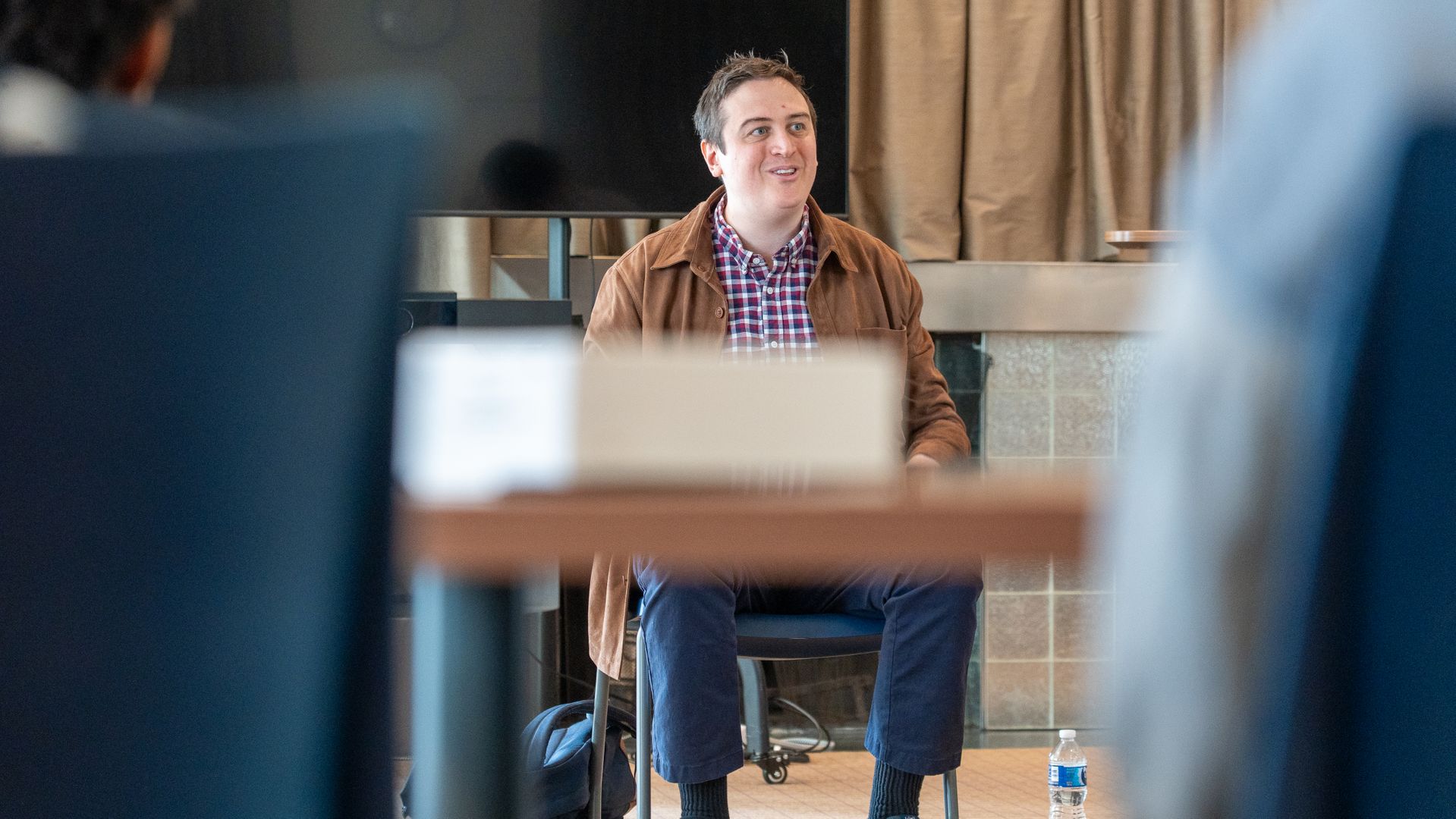
At an all-school meeting in April, Pete shared his knowledge about how to deepen and engage in democracy with faculty and students. He also joined a small group of students for a special luncheon where student leaders spoke with him directly. Pete shared his insights with student leaders on improving clubs, affinity groups, and student unions at Field, including combating disengagement through meaningful outreach and programming. Feeling a sense of belonging, he said, will lead to repeated participation and better community engagement. Pete encouraged club leaders to ask members to participate in or lead activities. He said this is because having a role gives people a sense of belonging.
As final words of wisdom to impart to students, Pete said, “You don't have to wait to change the world. You can change the world now, and clubs are one of the best ways to do that. And changing the world doesn't have to be a grand thing; even high school clubs have changed the world in grand ways before.”
After hearing from Pete, we began to think, “Is civic engagement: joining or creating a community, or club, the best way to bridge the divide that we see in life today?”
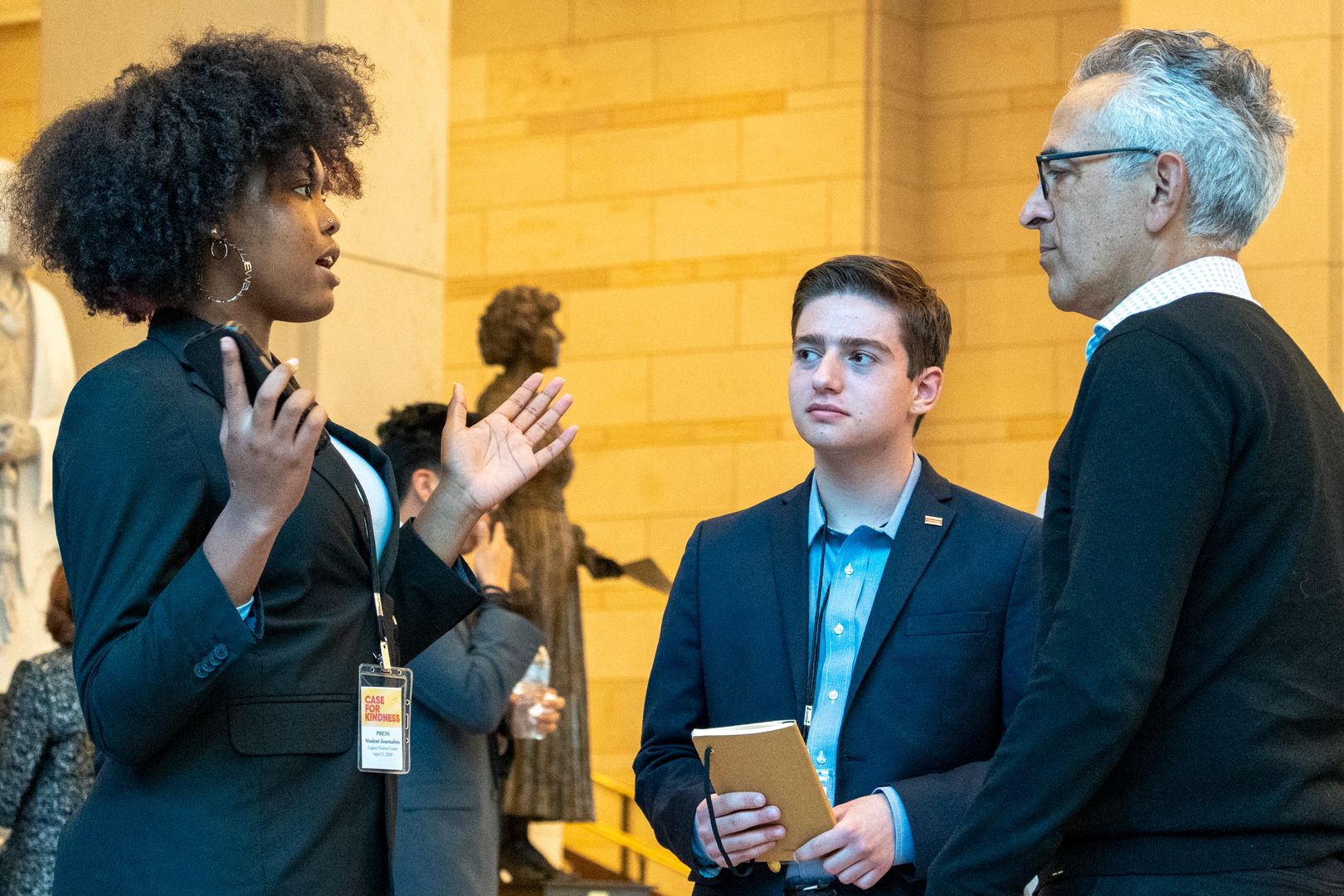
A few days later, while we were still playing with this idea in our heads, we had the privilege of attending a special screening of “Case for Kindness” directed by Steven Sawalich at the U.S. Capitol. The documentary follows a collection of stories from a diverse group of people across the nation about how they have discovered, shown, or received kindness in vital ways that have changed their lives.
Some acts of kindness that stood out to us were those of Wendy Bess and Lisa Silvera, Co-Founders of Bess-N-Soul. Wendy, a younger asian woman, and Lisa, an older Black woman, unexpectedly connected during the pandemic over a love of growing food and cooking together. The two embraced their cultural differences, and eventually their efforts led to feeding the veterans in an encampment in Los Angeles. Or Erica Ford’s LIFE Camp, founded in New York, provides mentorship, case management, and support to marginalized youth and families victim to violence and incarceration. The film shows how LIFE Camp supported Delano Martin, a man who was wrongfully convicted of attempted murder, robbery, and assault, and lost friends and family due to violence, not fall victim to the system, and became a model for others.
The most distinct example of the ripple effect of kindness came from the story of Civil Rights activist Daryl Davis in the documentary. Daryl describes his curiosity about why KKK members felt the way they do about Black people. He decided to write a book to answer this question and began interviewing Klansmen despite the dangers he faced as a Black man. During these interviews, Daryl did not aim to change their ideologies about Black people; instead, he listened and engaged in open, honest communication to learn more.
Despite the very apparent differences between Daryl and the Klansmen, both parties surprisingly gained mutual understanding and respect through their conversations. Daryl uses five core values that he could apply to everyone, regardless of background, when bridging differences:
“Every human being wants these five core values in their lives. Everyone wants to be loved. Everyone wants to be respected. We all want to be heard. We all want to be treated fairly and truthfully, and we all want basically the same things for our family as anybody else would want for their family,” Daryl said.
Through small displays of these core values in conversation, such as listening and respecting the other person's perspective even when it differs from your own, the other person will feel respected, heard, and treated fairly and truthfully.
Through Daryl’s conversations with the KKK members, Klansmen realized that what they initially had thought about Black people was wrong. Over time, KKK members began giving Daryl their regalia to signify that they were denouncing their membership in the Klan.
When faced with someone who has an opposing viewpoint, it is important to ask questions and spend time with them. Though everyone might not agree, Daryl noted that “you don’t have to respect what they say, but instead their right to say it,” and remember that they are still human.
Even Pete agrees with Daryl’s core values, “The way that you actually heal divisions is you talk about something else. The main reason we're divided is we don't have a shared sense of a we,” he says. “There are internal divides and there are politics and there are debates about which way we go, but the way that you even have the precondition of those debates to be functional at all is to be a shared we, and the way to become a shared we, is by building up trust, and the way to do that is to by having a lot of activities together.” This is exactly like what Daryl did through respectful dialogue.
After attending these events, we began to see crossovers between addressing the divide through civic engagement and small and large acts of kindness. By following Daryl’s five core values and listening to Pete's suggestions to join clubs and step outside our comfort zones, we can improve our communities.
Joining clubs forces you to interact with other people whom you wouldn’t normally encounter on a day-to-day basis. Not only do you expand your network, but you expand your reach. When you listen to others’ perspectives and follow Daryl’s core values, you build empathy for others; you become kinder.
Community leaders have a responsibility to create spaces where people can come together. These spaces can foster individual and community growth, be places where people feel seen and heard, and create opportunities to show others acts of kindness. Small acts of kindness build trust and connection. When there is trust and connection, there is more cooperation.
We must care about making connections because they give us a sense of belonging, improve our productivity, mental health, and collaboration. Through civic engagement and dialogue, we can put aside our differences, build common ground, and feel a stronger sense of meaning and belonging. We can unite more easily to combat issues in our communities.
So, our challenge to you is to go out into the world today and show at least three acts of kindness. Small acts of kindness, like holding the door for others, greeting people by name, and asking how their day is going, are just as important as large ones. Build spaces where we can be better connected with each other, start a club, or find one with others who share an interest.
A stronger community and better future begin with the small choices we make to see, hear, and care for one another.



.jpg&command_2=resize&height_2=85 "Nate ’27 Wins Silver Medal in Scholastic Arts Competition")


.jpg&command_2=resize&height_2=85 "Students Design Legacy Posters for Civil Rights Journey")


